
The image of the witch became popular subject matter for many art forms in sixteenth century Europe, particularly painting, printmaking, and poetry. Dosso Dossi’s 1520 CE painting The Enchantress is one striking example. Dosso Dossi (1489 – 1542) was an Italian court painter who loosely based The Enchantress on an epic poem by one of his artistic contemporaries, poet Ludovico Ariosto (1474 – 1533).
Lane Eagles’ Good vs. Bad Witches in Renaissance Art compares The Enchantress to a 1510 CE woodcut called The Witches by German printmaker Hans Baldung Grien (1484/5 – 1545). Though very different in media and style, these images teach us about specific cultural attitudes toward witches and, by extension, women in general, between Renaissance Italy and Germany.
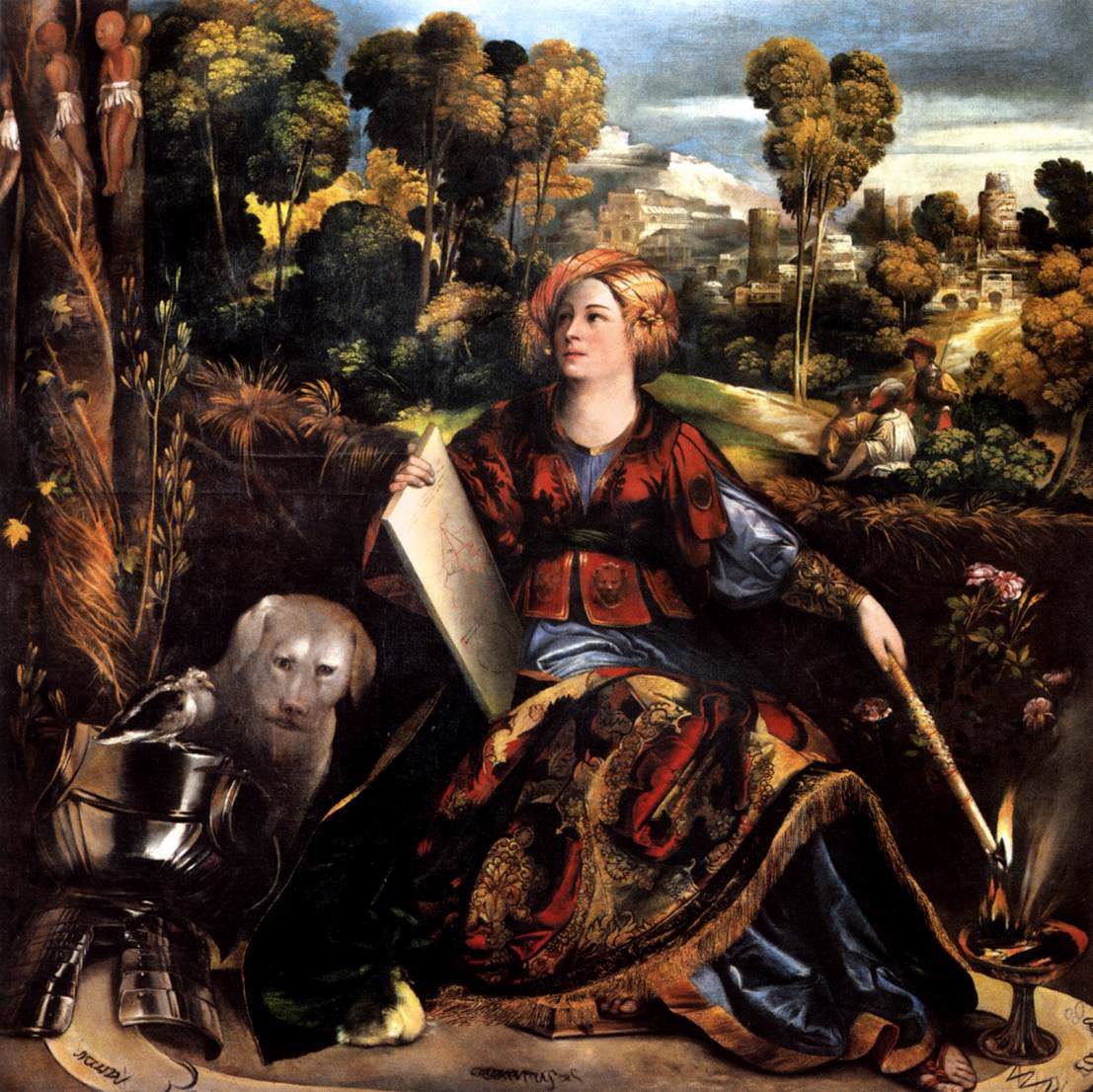
Dosso Dossi, The Enchantress, c.1520, oil on canvas
Lane Eagles, PhD, is an Assistant Teaching Professor at the University of Washington Information School, where she serves on the faculty for the Master of Arts in Museology Program. She teaches courses on museum history, exhibit development, and curation. Her research sits at the intersection of museum studies, Renaissance visual culture, and feminist art history, and she has a special interest in witch history. Before becoming a professor, she worked in curatorial roles in the museum field, at the Museum of Pop Culture, Bellevue Arts Museum, Burke Museum of Natural History and Culture, and Henry Art Gallery. Her writing has appeared in publications including: The Conversation, Smarthistory, Salon, Parnassus, SEQUITUR, the New York Fashion Institute Fashion History Timeline, Seattle Art Museum blog, Dress: The Journal of the Costume Society of America, and the Public Humanities Journal.
Comments are closed here.