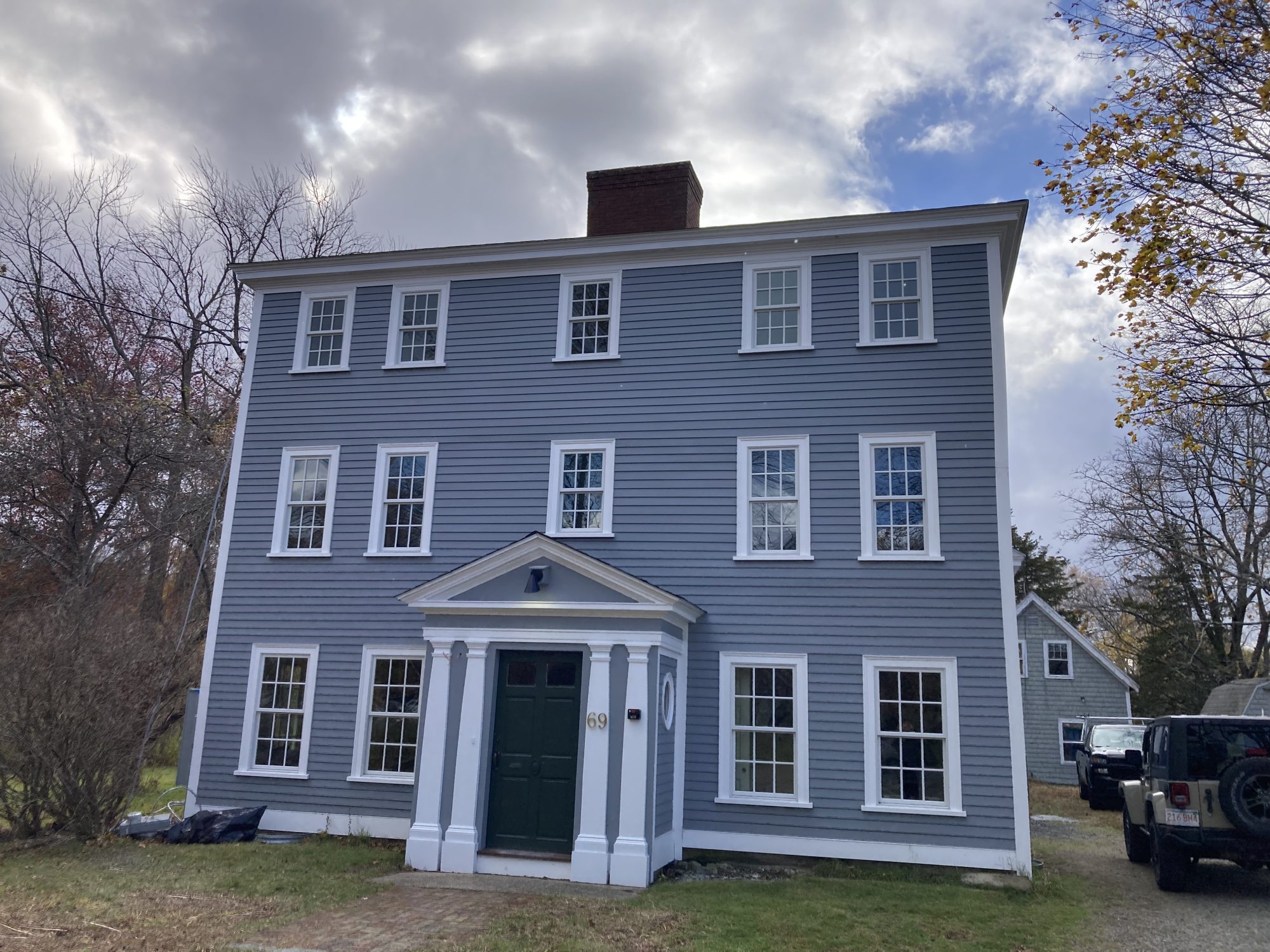
More About Rachel Haffield Clinton Home, Site of

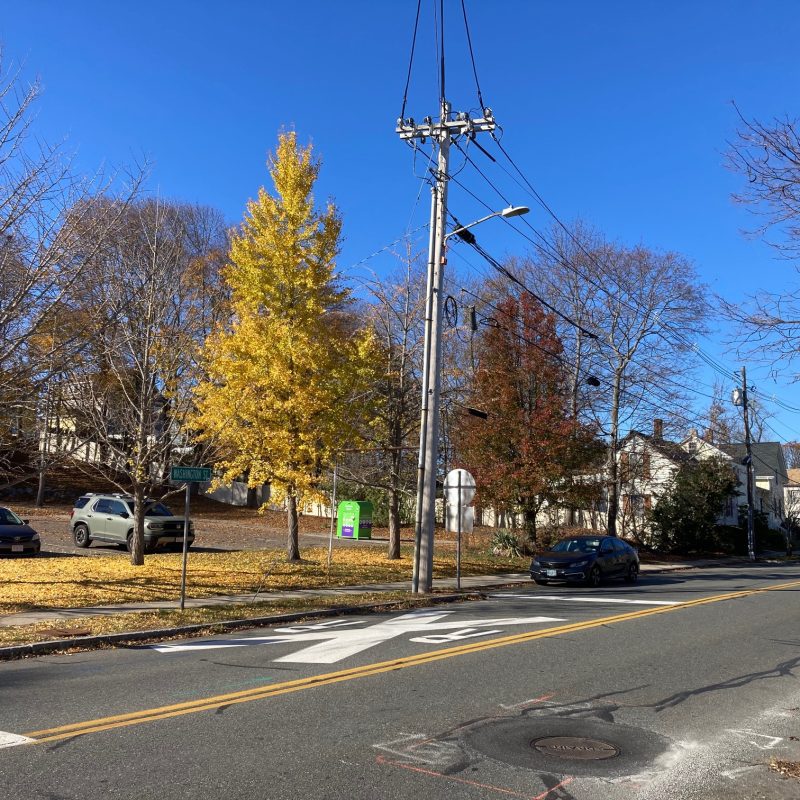
When Richard Haffield arrived in Ipswich with “a considerable estate of goods and ready money,” he was awarded sizable land grants totaling more than 125 acres. He built the family home in southeastern Ipswich. His 100-acre farm was to the east as well. A map at the Ipswich Museum also shows an early Haffield lot in what is downtown Ipswich today, near the railroad tracks. It is not likely Haffield kept that for long, according to Ipswich historian Gordon Harris, as at the time the area was marshland.


The household that Rachel Haffield was raised in may have been initially wealthy, but it was turbulent. Living with siblings from her father’s two marriages, a mother who favored her own three children but not her two older stepchildren, and slowly declining fortunes after father Richard’s early death, in 1639, the tense environment was exacerbated by her mother Martha’s declining mental health.  Fifty years of legal wrangling followed Richard’s passing. Unusually for the time, Martha Haffield did not remarry and remained a widow until her own death three decades later, meaning Rachel had no father figure, or any male role model, from the age of ten.


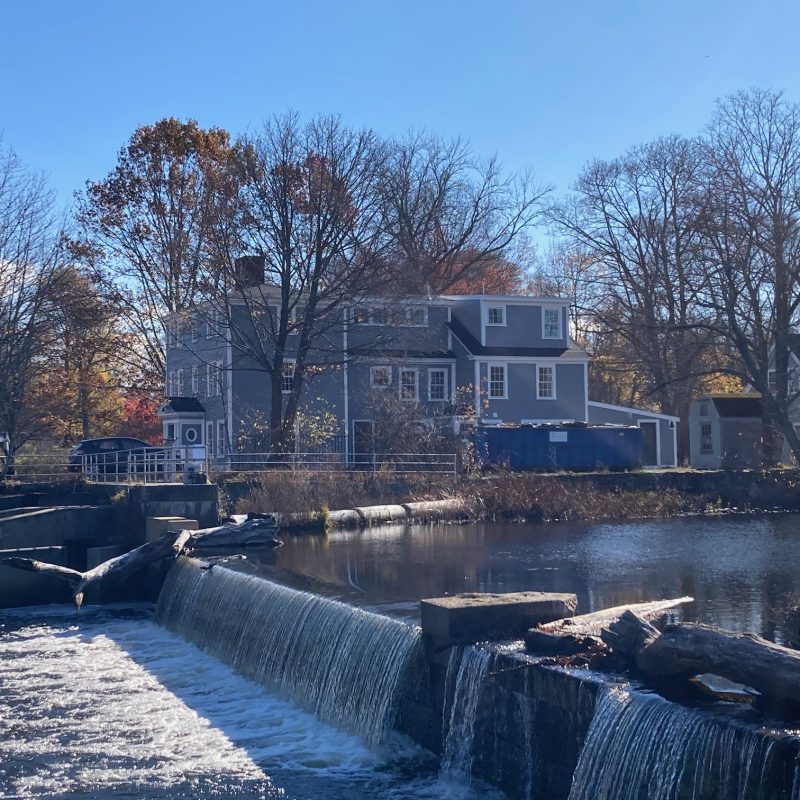
One by one, four of the daughters married and left the house, the last in 1654. Only Rachel remained with her mother. Perhaps it became too difficult to keep up the property, or maybe, still in southeastern Ipswich, they felt too remote, particularly with Martha’s mental health issues. Whatever the reasons, according to the Historic Ipswich website, “In 1655, the Town of Ipswich took mercy on the old woman and sold her ‘four rods of ground…near the Mill Dam, for twelve pence, to build a little house on.’” This lot was in the center of downtown Ipswich, on the river.


For more information about Rachel Clinton’s Chebacco Parish/Essex years, please visit: Rachel Haffield Clinton, Sites Of.


In 1665, now living in Ipswich center, Rachel began a relationship with Lawrence Clinton, a servant of Ipswich resident Robert Cross. Talk of marriage began. Clinton still owed Cross over three years of work under his contract, so Rachel paid Cross £21 from her own money to purchase Clinton’s “freedom.” Her legal right to do so was later questioned but she apparently convinced the powers-that-be. According to Ipswich marriage records, Rachel and Lawrence were wed at the end of 1665. Rachel was 36. Lawrence was 14 years her junior. A woman more than a decade older than her spouse was unusual for the time.


The following year, in 1666, Rachel’s mother Martha was officially declared insane, or non compos mentis, and Rachel’s brother-in-law, Thomas White (married to her younger sister Ruth), was put in charge of Martha’s affairs. Thomas was afraid Rachel’s new husband Clinton, in collusion with his former employer Cross, would gain control of the Haffield estate. The age difference between Rachel and Lawrence was one issue but the greater problem was Rachel’s claim to have “her own money.” Rachel declared that she had been looking after her mother’s affairs for some time and that it was her right to spend the money as she saw fit.


White pursued the matter in court, several times. It seems likely that Rachel did have the right to her money. For a time, Rachel and Lawrence apparently lived in the little house on the river with the mentally-ill Martha. The widow still had the Haffield farm, later assessed at £300, which could be rented to tenants. Thomas White eventually managed to gain control of much of the property. The Ipswich household goods were taken and Rachel’s mother Martha was moved to the White house in Wenham, where she was kept in “bad condition.” She did not survive long, dying in March of 1668. Written six years earlier, Martha’s will bequeathed “my dwelling house with all the appurtenances as also all my household goods unbequeathed” to her daughter Rachel, but White seems to have seized control of much of her inheritance.


Rachel herself eventually became disillusioned with Lawrence Clinton and Robert Cross. Perhaps they really were con men, taking advantage of her and manipulating her for her portion of the Haffield estate. She testified that she had been assured Clinton would one day inherit family riches himself, and “he told me a thousand lies more to delude me.” Lawrence Clinton also turned out to be a bad choice as a “loyal and faithful husband.” Throughout the 1670s, he had liaisons with other women; “…he was found guilty of both fornication and rape,” according to historian Marilynne Roach. He refused to pay for Rachel’s maintenance, and eventually abandoned her. He had sired a child with one of the women, Mary Wooden, who he later married in Rhode Island, despite still being legally married to Rachel. Rachel, too, was suspected of her own infidelity, or at least, of “unlawful familiarity” with one John Ford. In October of 1681, she was finally granted a divorce after petitioning the court repeatedly.


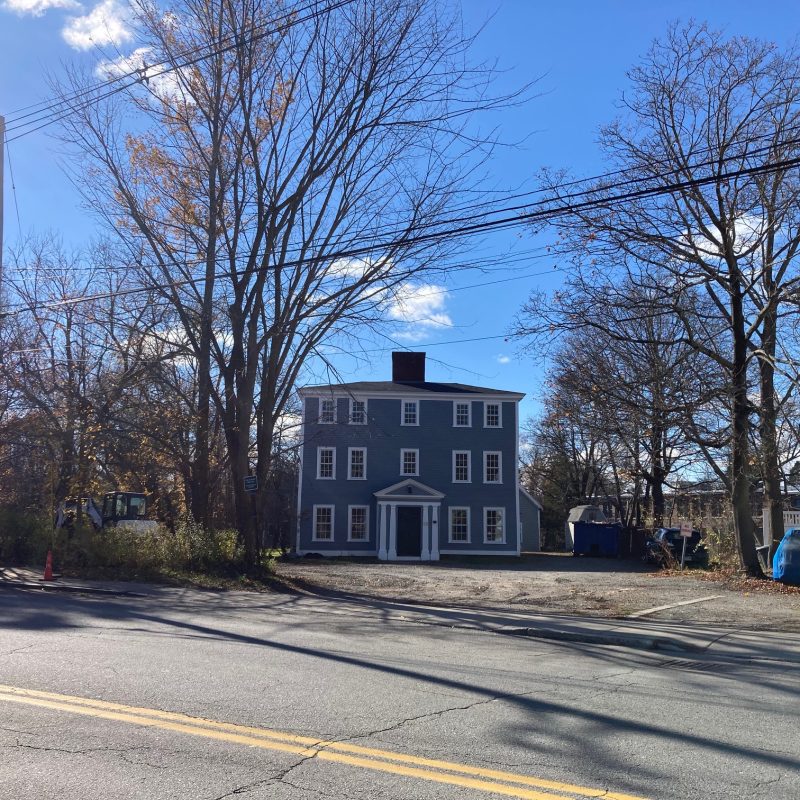
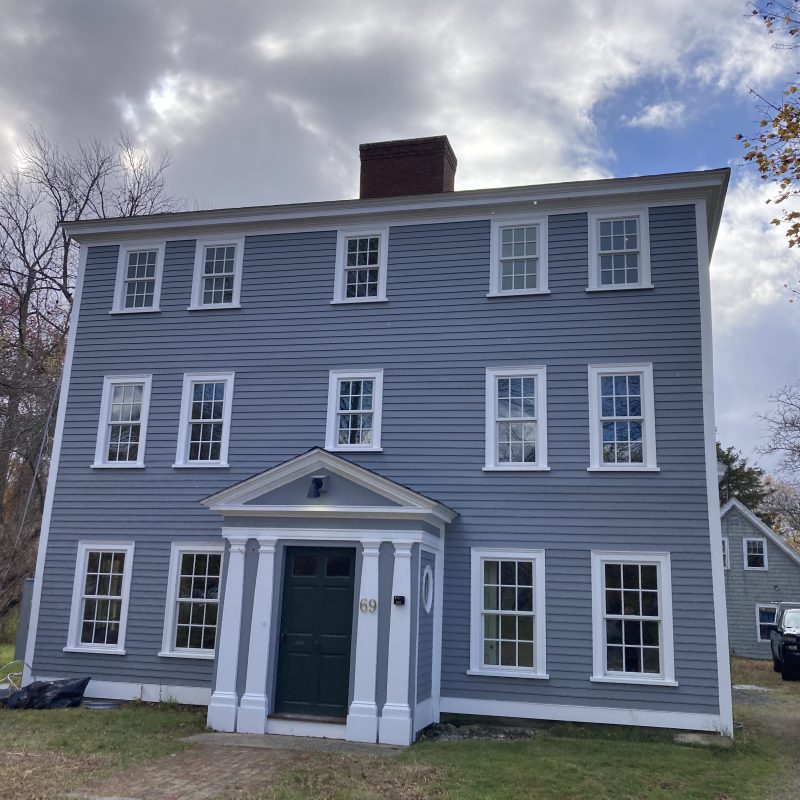
Despite coming from what had once been a significant estate, Rachel was left impoverished and alone in the world, needing public charity from the town in her later years. The records note four instances in 1686 where the town paid for repairs to Rachel’s house – perhaps the little house by the river, although according to Rachel’s own account, her brother-in-law Thomas White sold that house out from under her years earlier. (The lot granted to her mother in 1655 remained in White hands – according to the Historic Ipswich website, “In 1723, Rachel’s nephew Thomas White Jr. of Wenham sold the 4-rod lot to Samuel Dutch, who built the house still standing at 69 S. Main St. The small home of Widow Haffield and Rachel Clinton was recorded as still standing on the lot a few years earlier.”)


By 1692 Rachel was 63 years old, alone, and destitute. Like Sarah Good, another woman caught up in the Salem witch trials, Rachel’s diminished circumstances had turned her into an angry and sullen beggar who made her neighbors uncomfortable. She had been suspected of witchcraft for at least a decade; it is little wonder that when the fear and accusations of 1692 approached, she was the perfect suspect. Author John Demos points out, “In at least two instances her supposed witchcraft stemmed from unsuccessful attempts to beg food and/or drink from neighbors.”


Rachel was one of the earliest people to be accused during the Salem witch trials, with a warrant issued for her arrest on March 29, 1692. Records of the Salem Witch-Hunt says, “The warrant for Rachel Clinton is the first one not to have originated with the authorities who first looked into the Salem Village accusations.” Rachel was arrested by constable John Fuller and held for examination. On March 30, 1692, three Ipswich neighbors testified against her: Mary Fuller claimed that, during an argument with Clinton, a neighbor girl dropped dead. It turned out she had only fainted, but apparently it was Rachel’s mere presence that caused the incident. Thomas Boreman testified about an incident years earlier at meeting, when Clinton roughly elbowed two parishioners. After reporting the event to the town selectmen, Boreman was bothered by three animal apparitions – a dog, a cat, and a turtle – while riding home at night. He blamed Clinton for these appearances. Another episode from a decade earlier was described by William Baker, who claimed Rachel Clinton was able to drain a barrel of its entire contents of beer, simply by walking up and down the road near the house of the barrel’s owner, with whom she had had an earlier altercation.


Rachel remained in Ipswich jail, in fetters, from April until January of 1693, when an unknown person paid her jail fees and she was released. Where she lived out the few remaining years of her life is unclear, although local tradition claims she lived in a little hut on Hog Island. Rachel’s exact death date is not known, but she was deceased by early January, 1695.


The Haffield/Clinton home lot on the Ipswich River is located at 69 S. Main Street. Private Residence. Not Open to the Public. Today, the house built by Samuel Dutch still stands, much-enlarged and improved. An early Haffield lot, not long occupied, was on today’s Washington Street, near the railroad tracks.